
Are Braids a Protective Style? What “Protective” Really Means for Afro Hair
I walked into my first trichology appointment not knowing I had a hair loss condition. I walked out with a diagnosis: traction alopecia, with small bald patches at both temples. Years of high-tension styles had done that, many of them styles I'd been told were “protective”.
That's why I'm so passionate about this. In How to Love Your Afro I say the term is used incorrectly far too often in our community, and it's high time we had a real conversation about it.
What a protective style actually is
“A style that protects your hair shouldn't cause any breakage, damage or tension to your hair and scalp whatsoever.”
— Paige Lewin, How to Love Your Afro
So instead of asking whether a style is “protective”, I look at two things: tension (how much pulling force is on your scalp and follicles) and manipulation (how much your hair is handled and changed).
High-tension styles to approach with caution
- Braids and cornrows pulled too tightly at the scalp. Even styles classed as “protective” can create high-tension points if the tension isn't distributed evenly, and added hair adds weight.
- Locs and faux locs not started by a professional who understands your hair and scalp and can choose the right partings, size and method. Tight interlocking and the weight of long locs, especially on small partings, add up. Synthetic fibres can also rub the cuticle.
- Wigs and extensions with very tight cornrows underneath, wig combs gripping the roots, glue around the hairline for days or weeks, improper removal and the weight of multiple bundles.
- Tight ponytails scraped up with bristle brushes, heavy gels and edge control.
Over time, styles like these can lead to weakened follicles, breakage and potential hair loss. For me that meant years of braids, cornrows, wigs and tightly interlocked locs. Pain and discomfort aren't signs of a successful hairstyle; they're your body telling you something is wrong.

The high-manipulation self-check
Ask yourself:
- How often do I handle my hair to maintain this style?
- How many strands are handled to create it?
- How much heat styling does it need, and how often?
- What chemicals are used?
- How much product, and how many products, does it take to create and maintain it?
Low-tension, low-manipulation styles I love
- Your Afro worn in its natural state with a light leave-in or curl cream.
- A wash and go, left practically untouched until next wash day.
- Braid-outs and twist-outs using only your natural hair.
- Twists, flat twists, comb coils and finger coils.
- Bantu knots, with care around tension.
- Loose braids or cornrows with large parts and no added extensions.
- Headwraps, scarves and turbans, looser and satin- or silk-lined.
- Hair accessories placed so they don't create tension points.
Don't forget wash day
Long periods without regular, correct cleansing and conditioning only “protect” your hair from getting and keeping moisture. Whatever you're wearing, keep your scalp clean and your hair conditioned. When your hair is out, a weekly wash day with low, gentle heat while you condition is the reset I rely on. See A Simple Wash Day Routine for Afro Hair and How to Deep Condition Afro Hair at Home.

When to get help
If you notice discomfort, soreness or thinning, especially at your hairline, react quickly before damage becomes irreversible. A trichologist or dermatologist can assess your scalp. I was incredibly fortunate that mine was caught early enough to grow back new, healthy hair. Not everyone is that lucky.
Frequently asked questions
Are box braids a protective style?
Only if they cause no breakage, damage or tension. Tight installs and heavy added hair can create high-tension points.
Can wigs cause hair loss?
Tight cornrows underneath, gripping combs, glue at the hairline and the weight of the wig can all add tension. Many who wear these styles experience hair loss.
What's the most protective style?
Styles that need minimal force and gentle handling, like your Afro worn out, a wash and go, or twists with no added hair.
The Heat Hat Method
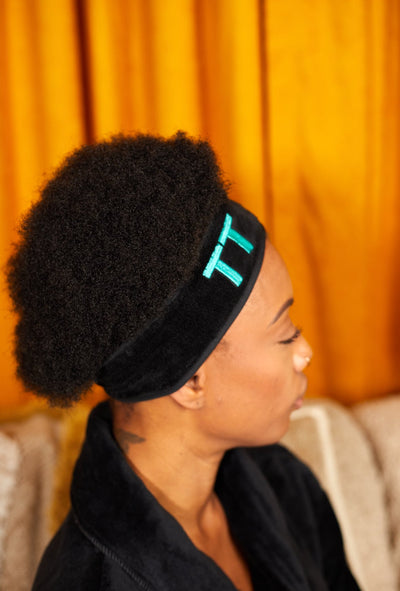
The Self-Care Headband doubles as a low-tension styling option, and on wash day it seals the Heat Hat's warmth in at your edges.
From the book
How to Love Your Afro by Paige Lewin
This post draws on Chapter Eleven, Styling: Best Practices, and Chapter Nine, Trichology vs Dermatology. The Bloomsbury-published, Amazon bestselling guide to loving and caring for your natural hair — in hardback, Kindle and audiobook.
Amazon UK Amazon US Barnes & Noble Waterstones Blackwell's Roving Heights (Nigeria)
Paige xx
Black Friday: 30% off the Leopard Heat HatThe Heat Hat makes your deep conditioner work harder on wash day. Code LEOPARD30 is added for you. Ends 30 Nov.Shop the Leopard Heat Hat

The Hair Journal, in your inbox
Get Paige's wash day tips first.
New Hair Journal posts, honest Afro hair education from How to Love Your Afro, and first access to new Team Texture drops.
Unsubscribe any time.


